

From Nearly Leaving Hollywood to Leading the Moment: Women Speak on Driving the Future of Storytelling
At the Shifter(s) Series in West Hollywood, Women storytellers opened up about resilience, representation and the power of persistence

WEST HOLLYWOOD, Calif. — At a Sunday gathering tucked inside the Juniper Gardens at the 1 Hotel West Hollywood, the Shifter(s) Series returned with a clear message: the future of storytelling is being shaped by women redefining how, and for whom, stories are told.
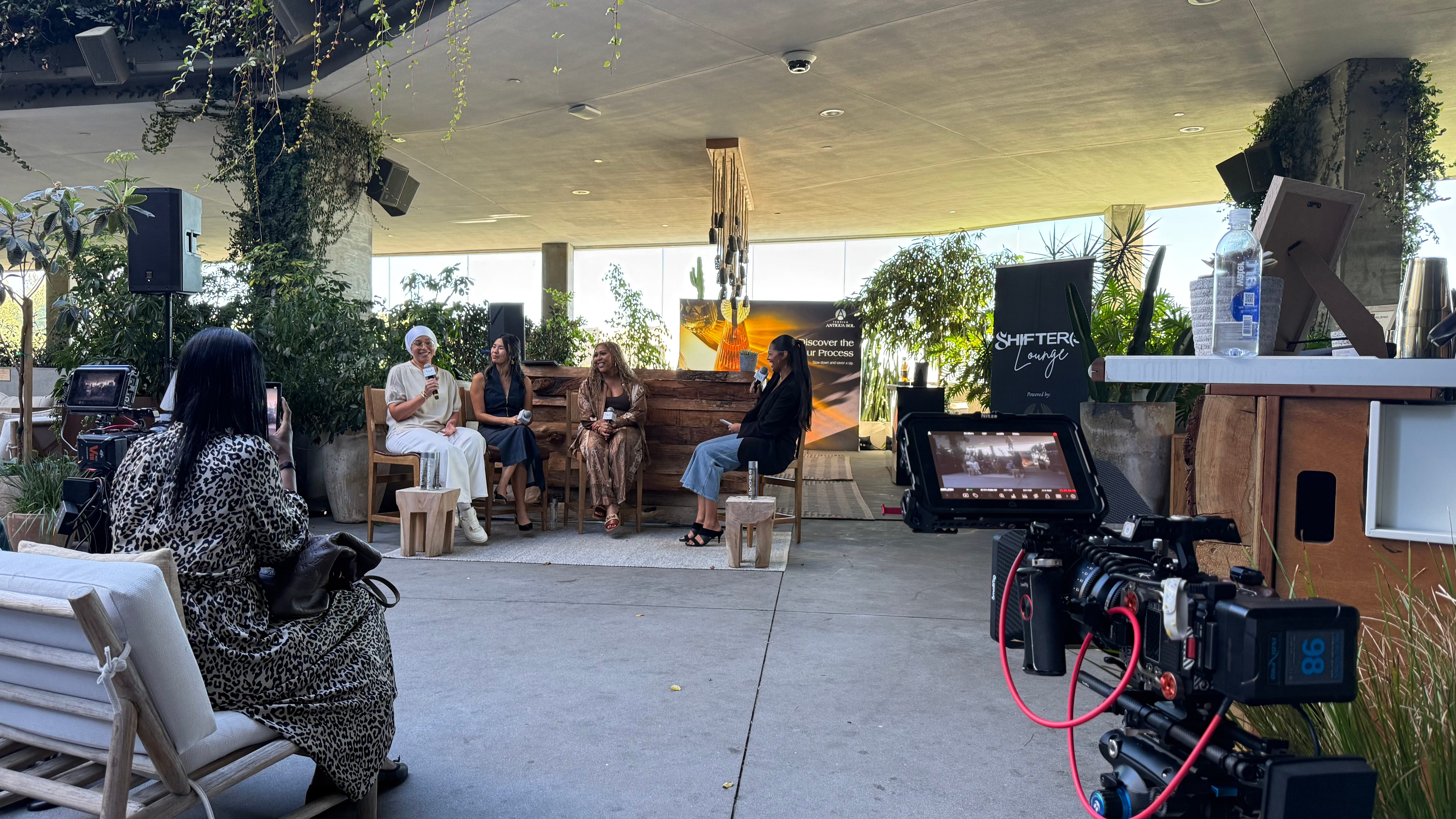
The afternoon event — a collaboration between The Shift Studios and Winston Baker — brought filmmakers, writers and cultural leaders together for The Future of Storytelling × Rhythm Garden, a program focused on creators pushing the industry toward more inclusive and impactful narratives. But it was screenwriter Marilyn Fu, speaking during the “Shaping Tomorrow: Women Driving Storytelling & Change” panel, who delivered one of the most personal and resonant reflections of the day.
Fu, known for her nuanced, character-driven writing, told the audience she arrived at the event in the middle of what she described as “a shift” in her own life and career. Months ago, she said, she was ready to leave Hollywood altogether.
“I was really heartbroken and felt like I was going to disappear,” she said. “I had a project with every huge Hollywood attachment you can think of — a social impact story that meant so much to me — and it didn’t go forward. I thought, maybe that’s it. I’ve made some great stuff. Maybe I’m good.”
Then, everything changed at once.
A script she had written six years earlier — Rosemead, a film centered on a terminally ill Chinese immigrant mother who discovers her teenage son’s fixation with mass shootings — suddenly secured financing and went into production. Lucy Liu stars in the lead role.
“It’s interesting and nuanced, but difficult to finance,” Fu said. “And then all of a sudden, that film got financed and went into production.”
Almost simultaneously, Fu was invited into the writers’ room for The Copenhagen Test, an upcoming television project she co-developed with the same showrunner attached to her stalled social-impact film.
“I found myself in a position where this movie and this show are going to release next month,” she said. “I had to make a decision — am I going to disappear like I had planned, or am I going to really embrace this moment?”
Fu chose the latter. She signed with a new team at Paradigm, began working with a publicist and stylist and made a conscious choice to “be visible” — a pivot she said still feels surreal. “I’m just going to see it through and take every opportunity that comes my way,” she said.
Her story resonated deeply inside a panel focused on women creators shaping the next chapter of Hollywood. When asked how she stays grounded in an industry defined by inconsistency, Fu said creative longevity requires discipline and persistence, especially when validation is scarce.
“As a writer, it’s my job to write. It’s my job to create,” she said. “I’m not always going to be in a moment where someone is hiring me or paying me to do that. So I have to get up every day and find a way to keep going — write a short story, write in my journal, call someone I’ve been meaning to meet with. You never know what a lunch or an event like this will lead to.”
Fu also spoke candidly about the challenges independent filmmakers — especially women and women of color — face when seeking financing.
“When you’re asking people for money, you have to make them feel comfortable,” she said. “But if you’re a woman or a woman of color, think about the hurdle you have to cross. They may not share your lived experience. So how do we bring everyone into the same conversation so we can get that financing to flow?”
For Fu, creating Rosemead was both an artistic mission and an act of advocacy. She discovered the story in an L.A. Times article and said she was specifically looking to write a starring role for an Asian woman — a role she didn’t see reflected in the industry.
“I was hungry to find and write a starring role for an Asian woman. That was my mission,” she said. “I also wanted a story that could show the Asian experience and the American experience together. The alignment of that story coming to me at that moment — that’s what brought this film to life.”
She emphasized the need for women to speak boldly and take up space in rooms that weren’t built for them.
“If you have something to say, say it,” she told the crowd. “We need different voices to champion ideas from the bottom up — that’s how projects flourish, make impact and reach audiences.”
As the sun set and the event transitioned into the Rhythm Garden — Fu’s message lingered — storytelling’s future is in the hands of women willing to reshape it, even when the industry tells them otherwise.
And for Fu, that future is already in motion. Her film Rosemead is now screening, with her new series set to air next month. After nearly walking away, she stood before a crowd of women creators and said she chose visibility over retreat — embodying exactly what the Shifter(s) Series was built to spotlight: women shaping tomorrow by refusing to step back today.