


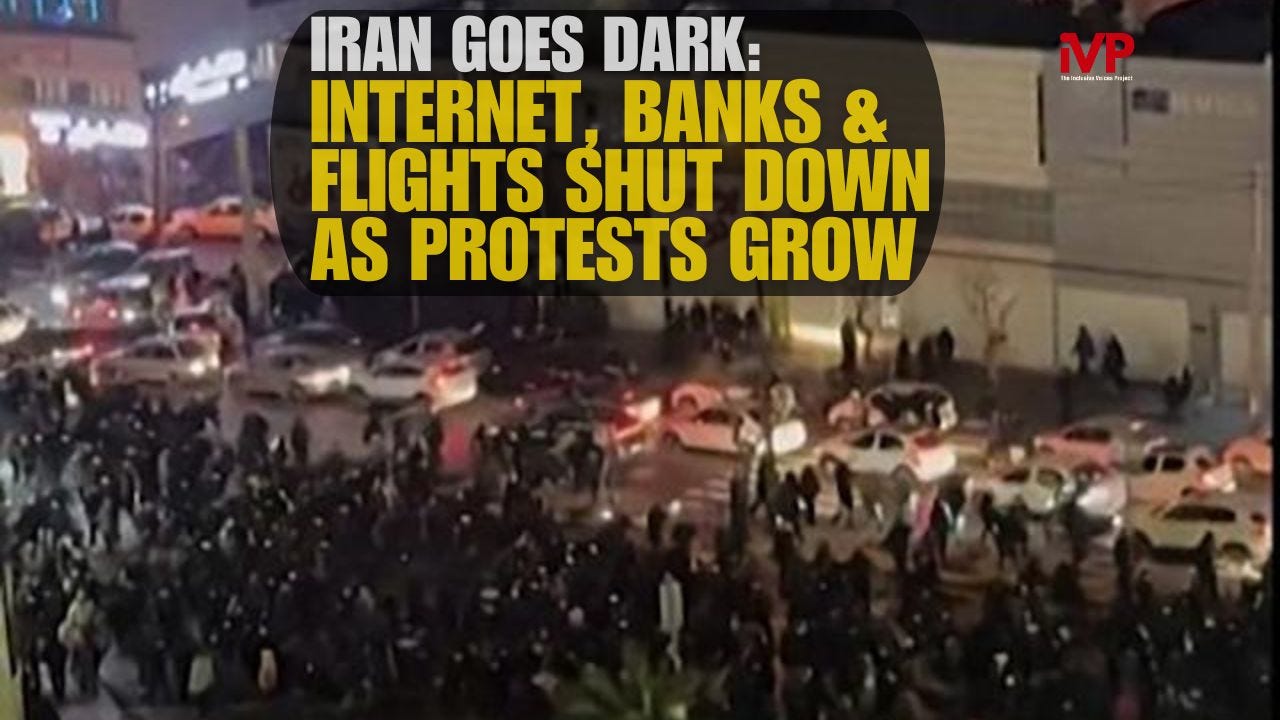
Los Angeles, CA — Iran’s government effectively severed life-line communications and public services Friday as nationwide protests intensified, cutting off internet, phone and banking systems and grounding flights, according to our sources in Iran, in what is one of the most sweeping attempts to disrupt civilian infrastructure in the nation’s recent unrest.
The disruptions came after protesters inside the country responded to a call for synchronized demonstrations issued by exiled crown prince Reza Pahlavi, turning an economic uprising into a broader political challenge to the Islamic Republic.
Authorities shut down internet access across the nation Thursday night, and landline and mobile phone networks were also disabled in many areas, according to Inclusive Voices Project sources. The online banking system stopped functioning, leaving Iranians unable to access their money, and both domestic and international flights were canceled or grounded as of Friday, according to our sources.
“Iranians demanded their freedom tonight,” Pahlavi said in a statement after communications were cut. “In response, the regime in Iran has cut all lines of communication.”
His call had urged people to chant at precisely 8 p.m. local time from their homes and streets, a tactic designed to amplify voice and solidarity even as state security structures attempted to isolate the population.
Internet monitoring organizations report nationwide shutdown targeting multiple networks, a tactic Iran has used in past protests to disrupt coordination and hinder global reporting.
The grounding of flights affected both domestic and international routes, with non-Iranian carriers canceling services between Tehran and destinations including Istanbul and Dubai, according to airport tracking services.
Protests, which began in late December amid soaring inflation and the collapse of the Iranian rial, have rapidly expanded nationwide, with demonstrators shouting slogans against the Islamic Republic and, in some cases, calling for an end to clerical rule and chanting the name of Pahlavi.
In several cities, chanting included “Death to the dictator!” and “Death to the Islamic Republic!” — slogans that reflect the widening political scope of the unrest and have historically carried severe penalties under Iran’s penal code.
Supreme Leader Ayatollah Ali Khamenei denounced the protests in remarks carried on state media, accusing protesters of acting on behalf of foreign powers and warning that the government would not yield to what it described as “mercenary” violence.
Government speakers also threatened harsher consequences for protesters, including potential legal penalties for property damage and “terrorist acts,” indicating a possible escalation in the crackdown.
International reactions were swift. France, Britain and Germany issued a joint statement condemning violence against demonstrators and urging Iranian authorities to allow peaceful protest and freedom of expression.
U.S. President Donald Trump warned Iran’s leadership against the use of lethal force and signaled support for peaceful demonstrators.
The unrest represents one of the most significant challenges to the Islamic Republic since the nationwide protests that followed the death of Mahsa Amini in 2022, and may be the largest public demonstration of national discontent since the 1979 revolution that brought the current system to power.
Iranians in the diaspora have held solidarity demonstrations and are using satellite internet and other channels to share information and coordinate advocacy, even as domestic communications remain shut down.