

Iran–U.S. Tensions Enter a New Phase
From Tehran to the diaspora, Iranians weigh shifting signals as protests continue at home

As protests continue across Iran, thousands of miles away from Tehran, Iranians in exile gathered last week outside a federal building in Beverly Hills, watching developments unfold in real time — phones in hand, eyes fixed on events inside a country many fled but never stopped following.
Wrapped in Iranian flags, demonstrators listened as Beverly Hills Mayor Sharona Nazarian, herself born in Iran, addressed the crowd. She spoke of exile, repression and the enduring ties many in the diaspora feel to family and friends inside Iran, where demonstrations driven by economic collapse and political anger have spread across dozens of cities.
Similar gatherings took place in 88 other cities worldwide, reflecting the intensity with which Iranians outside the country are tracking a moment defined by uncertainty — and by forces both inside and far beyond Iran’s borders.
Diaspora as Witness to a Volatile Moment
For Iranians abroad, the protests have become a near-constant focus. Demonstrators overseas have echoed chants heard inside Iran and closely monitored Iranian state television, social media posts and international reporting.
That attention sharpened after news broke that Venezuelan President Nicolás Maduro, a longtime ally of Tehran, had been arrested by U.S. forces. While the episode occurred half a world away, it quickly entered Iran’s domestic conversation.
The Associated Press reported that Iranian state media swiftly condemned the U.S. operation, portraying it as illegal and destabilizing. At the same time, the episode has prompted widespread discussion inside Iran about regional security, leadership vulnerability and the broader implications of U.S. intervention abroad.
How Venezuela Entered Iran’s Debate
The focus on Venezuela emerged as Iran faces renewed unrest sparked by a collapsing rial, inflation nearing 40% and long-simmering grievances against the ruling clerical establishment. Demonstrations that began at Tehran’s Grand Bazaar have since spread nationwide, with protesters chanting against Iran’s leadership and security forces responding with arrests, force and internet disruptions.
Against that backdrop, Venezuelan developments took on outsized significance. On Iranian state television, an analyst claimed — without providing evidence — that the United States and Israel had previously considered kidnapping Iranian officials. Even in Iran’s tightly controlled media environment, the claim stood out.
At prayers at Tehran University, a cleric urged worshippers to pray for the safety of Supreme Leader Ali Khamenei, citing concerns for his life.
Some of those broadcasts and remarks cited by the AP were also independently monitored and translated by Inclusive Voices Network contributor Silva Harapetian, a native Farsi speaker born in Iran and later left the country following the 1979 revolution — underscoring how diaspora monitoring has become an essential channel for understanding public messaging inside the country as access for foreign journalists remains limited.
Leadership Under Heightened Pressure
Iran’s reaction comes after a year of mounting strain on its leadership. During a 12-day conflict last year, Israel killed several senior Iranian military commanders and nuclear scientists, while the United States bombed Iranian nuclear enrichment sites. Since then, Khamenei, 86, has made limited public appearances, and Iranian officials have acknowledged heightened security concerns.
Analysts interviewed by the AP cautioned against drawing direct parallels between Iran and Venezuela. Iran is geographically larger, possesses a far more extensive military and security apparatus, and retains fissile nuclear material — factors that complicate any external action.
Farzin Nadimi, a senior fellow at the Washington Institute for Near East Policy, told the AP that any consideration of a Venezuela-style operation against Iran would involve significant risks and long-term consequences, noting the need to calculate “the day after” in a far more complex political landscape.
Protests Persist Inside Iran
Meanwhile, unrest inside Iran has shown little sign of abating. The U.S.-based Human Rights Activists News Agency reported that at least 36 people have been killed during the latest wave of protests and more than 2,000 arrested. Iranian rarely ever release accurate official nationwide figures.
Activists say security forces have detained protesters, including minors, and pressured families to remain silent. Internet slowdowns and shutdowns across several provinces have further obscured events, making independent verification difficult and increasing reliance on state broadcasts, diaspora monitoring and international reporting.
U.S. Political Rhetoric Draws Attention in Tehran
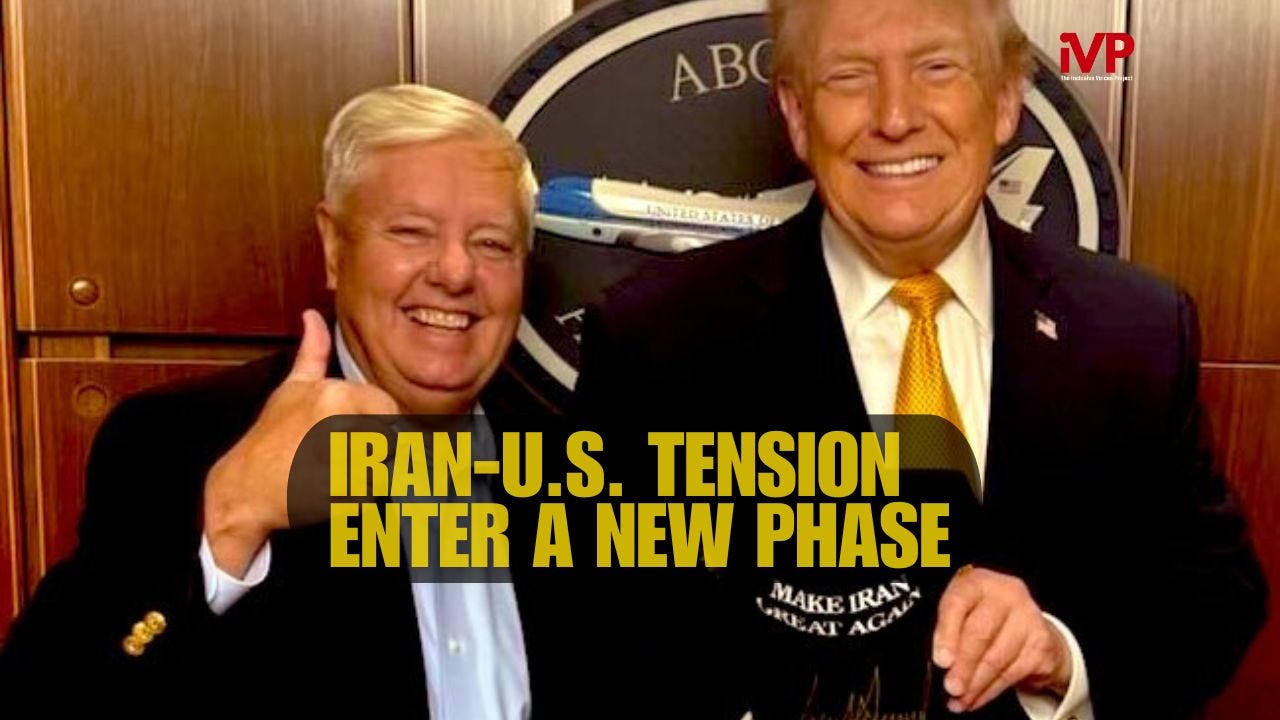
As Iranians grappled with developments at home and abroad, U.S. political messaging added another layer of scrutiny. Over the weekend, U.S. Sen. Lindsey Graham was photographed aboard Air Force One with President Donald Trump, presenting him with a black hat emblazoned with the slogan “Make Iran Great Again.”
Graham later appeared on Fox News, where he said he hoped 2026 would be the year the United States helps “make Iran great again,” framing Iran’s unrest as a moment of potential change. Images of the meeting and excerpts from the interview circulated widely on Iranian media and social platforms.
U.S. President Donald Trump warned that the United States would respond if Iranian authorities “violently kill peaceful protesters.” Israeli Prime Minister Benjamin Netanyahu referenced the unrest in Iran, saying the country could be approaching a decisive moment.
Iran’s Foreign Ministry rejected those statements, describing them as incitement and interference in domestic affairs.
A Shared Moment of Uncertainty
For Iranians outside the country, the convergence of protests at home, events in Venezuela and escalating international rhetoric has underscored both connection and distance. Demonstrators abroad can gather, speak openly and monitor developments, but the consequences of escalation — arrests, violence or further crackdowns — fall overwhelmingly on those inside Iran.
In cities across the United States and Europe, diaspora communities have rallied in recent weeks in solidarity with protesters inside Iran. Chants heard in Tehran — including “Javid Shah,” or “Long live the king” — have echoed at demonstrations abroad, reflecting renewed visibility for exiled opposition figures Reza Pahlavi the son of Iran’s last monarch. Pahlavi released a statement on his social media account. addressing soldiers and security personnel directly, framing the moment as a historic turning point.
As protests continue and global attention intensifies, the outcome remains uncertain. What is clear is that this moment is being experienced not only in Tehran’s streets, but across a worldwide Iranian community, bound together by language, memory and a shared, nail-biting watch over what comes next.