

The Collapse of the “Good Minority”

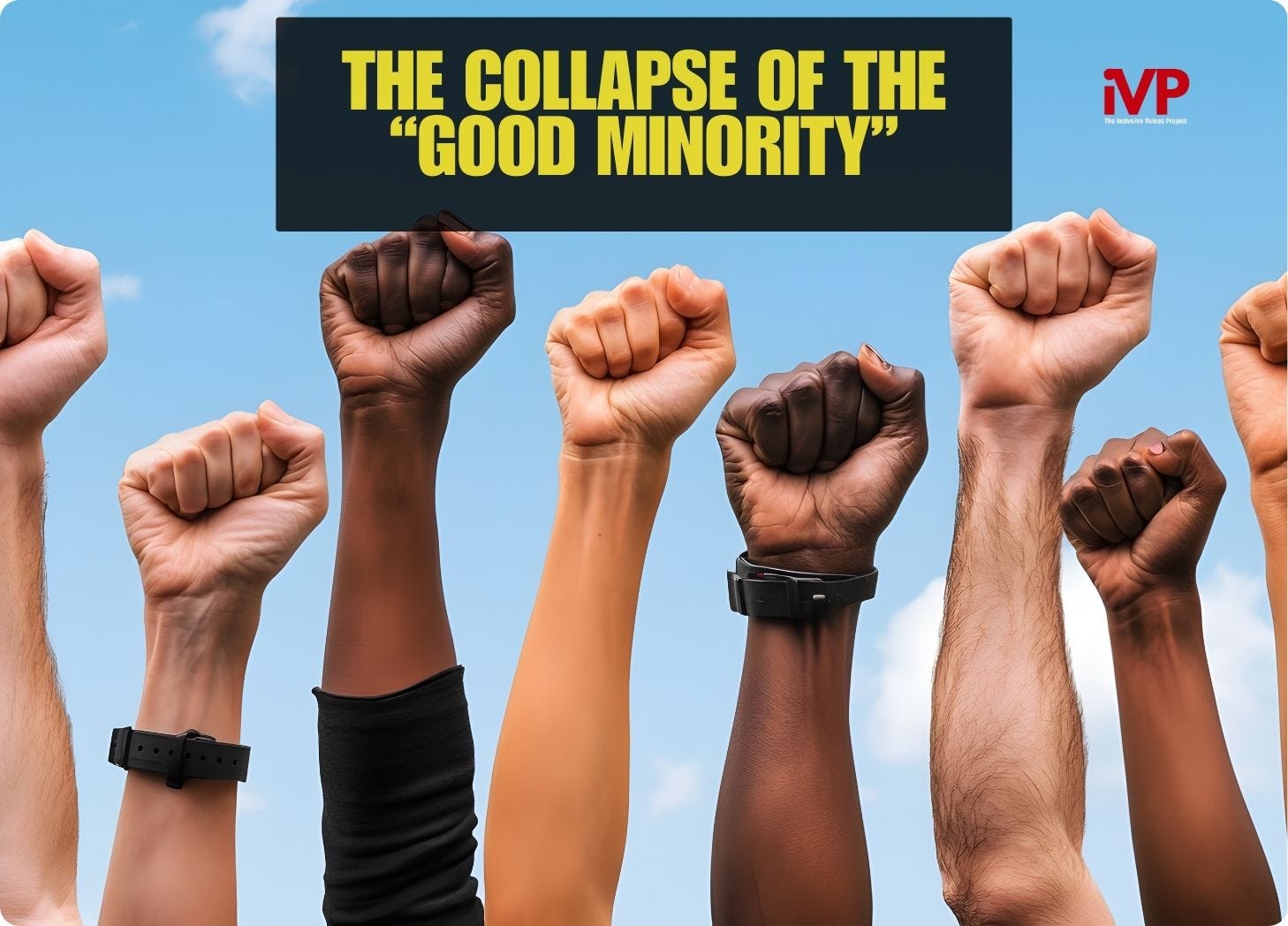
For decades, many immigrant and ethnic communities in the United States have lived under an unspoken assumption: that loyalty, assimilation, and proximity to power and whiteness offers protection.
History shows otherwise.
The backlash following a video by Dr. Mehmet Oz alleging Armenian-linked health care fraud has revealed a deeper and more destabilizing reality — not simply about Armenians, but about how quickly the category of the “model minority or “good minority” can collapse.
This is not a story about outrage. It is a story about expectation — and what happens when it fails.
What Is the “Good Minority”?
Sociologists use the term “good minority” or “model minority” to describe communities that are publicly framed as evidence that the American system works. These groups are often associated with entrepreneurship, military or civic service, political loyalty, and cultural conformity.
But embedded in that praise is a condition: belonging is provisional.
The “good minority” is not defined by identity alone, but by usefulness — whether a community reinforces dominant narratives in a given moment. When that usefulness shifts, so can perception.
Armenian Americans and Alignment
Armenian Americans occupy a particularly complex space in the U.S. racial hierarchy. Many identify as white. Many are socially conservative. Many supported President Donald Trump and his campaign promise of law-and-order governance.
For years, that alignment created a sense — spoken or unspoken — that Armenians were outside the scope of racialized suspicion that has historically applied to other immigrant communities.
The recent backlash including the Dr. Oz video has disrupted that belief.
In a matter of minutes, Armenian language, geography, and storefronts — once markers of assimilation — were suddenly interpreted as signs of otherness — and became visual shorthand for criminality — not through indictments or charges, but through implication. Identity markers stood in for evidence.
For many Armenian Americans, the shock was not just the accusation — it was the realization that alignment did not equal insulation.
Proximity to Power is Not Protection
U.S. history suggests this experience is not unique.
Japanese Americans were widely viewed as industrious and assimilated before World War II — until they were incarcerated en masse under Executive Order 9066.
Muslim Americans were celebrated as professionals and civic contributors before 9/11 — until surveillance programs treated identity as risk.
Eastern European immigrants once embraced as anti-communist allies became targets during McCarthyism.
In each case, communities believed they had “done everything right.”
In each case, the rules changed. Alignment did not translate into insulation.
Historians note that scapegoating does not require opposition. It requires expediency.
Proximity to Whiteness — and Its Limits
What is often overlooked in these moments is the role of proximity to whiteness — a status that has never been fixed, universal, or permanent.
Armenians are indigenous to the South Caucasus, a region at the crossroads of Eastern Europe and Western Asia. Because of this geography, Armenians are often described as “Caucasian.” In the United States, however, Caucasian is not a geographic term. German anthropologist Johann Friedrich Blumenbach coined the term in the late 1700s, mistakenly theorizing that people from the Caucasus represented the “ideal” human type. His classification had little basis in biology and was later discredited, but became a legal and social proxy for white.
That distinction matters.
In the early 20th century, U.S. naturalization laws limited citizenship to “free white persons,” forcing many immigrant groups to litigate their racial classification. Armenians were among those groups. Federal court decisions regarding Armenians were inconsistent, reflecting broader uncertainty about who qualified as white. Courts cited religion, perceived cultural similarity, and prevailing social attitudes — not geography — in making their determinations.
Even after Armenians were broadly classified as white for legal purposes, social perception often diverged from legal status. Armenians were frequently racialized as foreign, Eastern, Middle Eastern, or suspect — particularly during periods of geopolitical conflict involving the Ottoman Empire, Turkey, or the Soviet Union.
Sociologists emphasize that whiteness in the United States has always operated as a conditional status. Communities may be included when they are perceived as assimilated and excluded when they become useful as symbols of otherness.
In practice, whiteness in America has functioned as a gatekeeping mechanism — one that expands and contracts in response to power.
Loyalty Is Not a Shield
Proximity to whiteness can offer temporary insulation: access, credibility, and a sense of security. But history shows that insulation erodes quickly when identity becomes useful as a narrative shortcut for broader social problems.
One of the most uncomfortable truths revealed by these moments is that political loyalty does not mean protection, in some cases, it delays recognition that targeting has begun.
Civil rights historians note that scapegoating does not require opposition. It requires expediency.
In those moments, markers once associated with assimilation — language, neighborhood concentration, cultural visibility — are reinterpreted as evidence of foreignness or risk.
The “good minority” myth persists because it offers comfort. It suggests safety can be earned.
History suggests safety is conditional.
When Communities Are Used to Prove a Point
For Armenian Americans, the rupture has been especially jarring because it challenges long-held assumptions about belonging. Many believed that identification as white, political loyalty, and civic participation offered stability.
What this moment reveals is not betrayal, but structure.
Belonging in the United States has never been permanent. It has always carried conditions — some visible, many unspoken.
A community that was once invisible becomes hyper-visible — but only in the context of suspicion.
Fraud exists. Crime exists. Those facts are not in dispute.
What changes is who becomes the face of the problem.
Once that happens, distinction disappears. Individuals blur into groups. Evidence gives way to association.
The Cost of Misrecognition
For Armenian Americans, this moment has forced an uncomfortable reckoning — not only with external perception, but with internal narratives about race, belonging, and protection.
For other communities watching, the lesson is familiar.
The same framework has been applied again and again:
Identify a real issue
Attach it to an identity
Frame the community as an exception that failed
Move on when the political moment passes
Each time, the damage remains.
A Pattern Larger Than One Community
The collapse of the “good minority” is not a moral failure or a political miscalculation. It is a recurring feature of U.S. history.
Again and again, communities positioned as aligned or assimilated discover that proximity to power and proximity to whiteness are not guarantees. They are temporary arrangements — subject to withdrawal when fear, politics, or expediency demand a different narrative.
For the Inclusive Voices Project, documenting this pattern is not about assigning blame. It is about recognizing how quickly identity can be reinterpreted — and how often communities are left unprepared for the moment when belonging proves conditional.
History suggests that the most dangerous part of that collapse is not the targeting itself, but the surprise.
By the time it arrives, the frame has already shifted.
Thank you for writing this. 💜